
Cell Therapy Drug Development
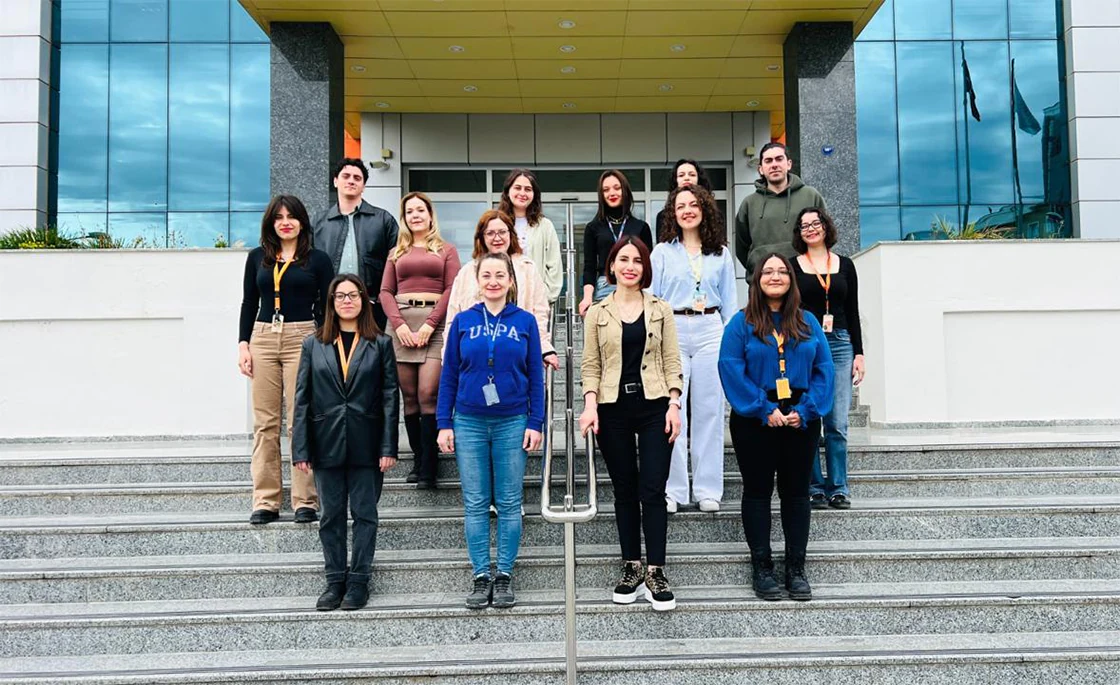
Principal Investigator: Prof. Dr. Güneş ÖZHAN
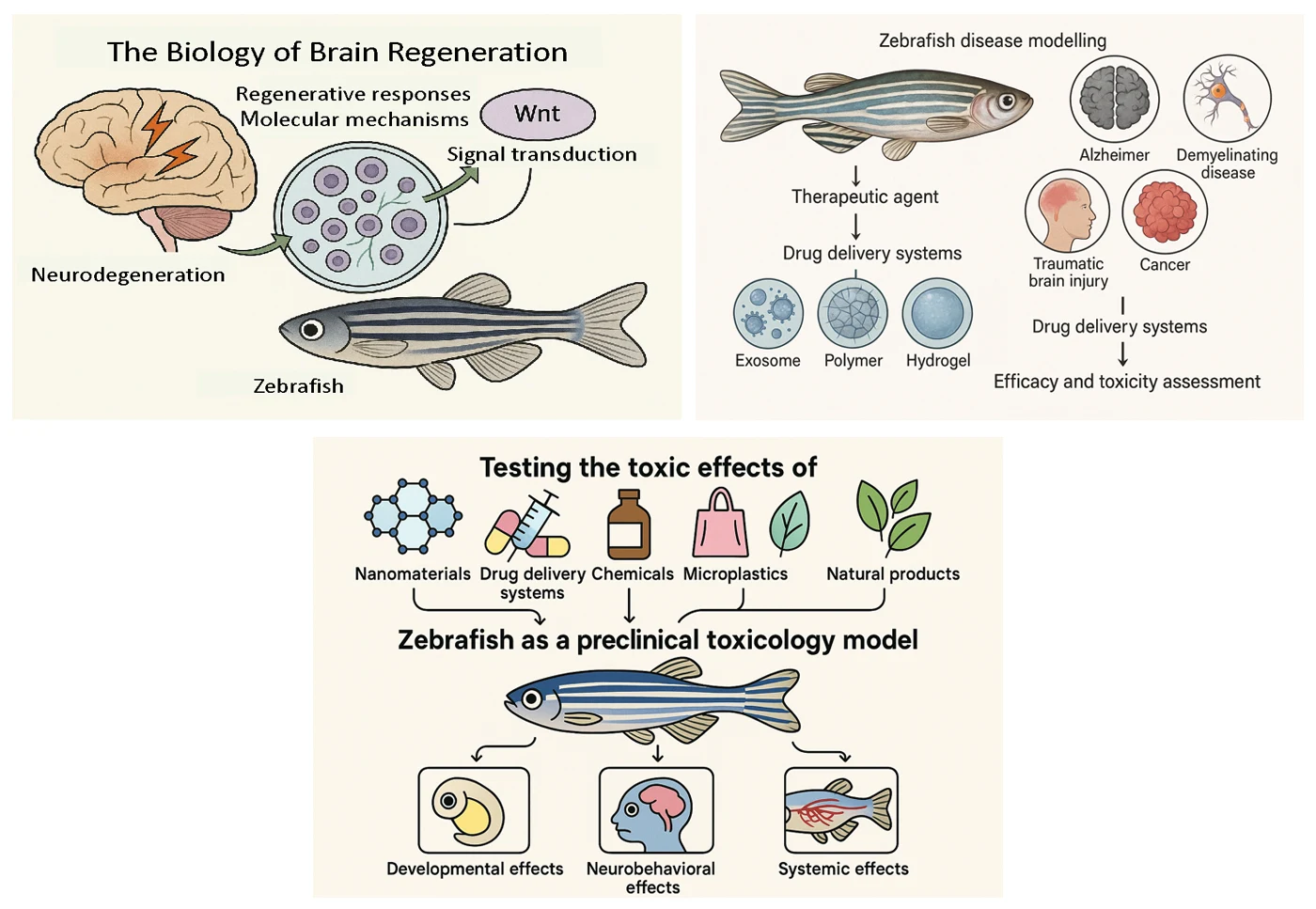
Our research group focuses on the biology of tissue regeneration, particularly in the brain, the molecular mechanisms underlying regenerative responses following neurodegeneration, and the roles of Wnt signaling pathways in these processes.
We use the zebrafish (Danio rerio) model to develop models of various neurodegenerative diseases and cancers, evaluating the therapeutic efficacy and toxicity of drug delivery systems based on exosomes, polymers, hydrogels, and solid lipid nanoparticles. Additionally, by analyzing the toxic effects of nanomaterials, drug delivery systems, chemicals, microplastics and natural products, we demonstrate that the zebrafish model serves as a powerful in vivo tool for preclinical toxicology studies.
Due to its genetic similarity to humans and sensitivity to toxic agents, the zebrafish enables us to assess the developmental, neurobehavioral, and systemic effects of new formulations through an interdisciplinary approach.
Publications
- Kadiroglu P, Kilincli B, Ilgaz C, Bayindir ZS, Kelebek H, Helvacioglu S, Ozhan G. Nanoencapsulation of Hydroxytyrosol Extract of Fermented Olive Leaf Brine using Proniosomes as a Functional Ingredient. Accepted, in press (Journal of the Science of Food and Agriculture).
- Demirtas I, Atalar MN, Bingol Z, Kokturk M, Ozhan G, Abdelsalam AH, Arslan S, Gulcin I. Evaluation of in vivo and in vitro Toxicity of Chestnut (Castanea mollissima Blume) Plant: Developmental Toxicity in Zebrafish Embryos Cytotoxicity, Antioxidant Activity and Phytochemical Composition by LC-ESI-MS/MS. Food Science and Nutrition. 2025. 13(6):e70387. doi: 10.1002/fsn3.70387.
- Karacicek B, Katkat E, Binokay L, Ozhan G, Karakülah G, Genc S. The Role of tRNA Fragments on Neurogenesis Alteration by H₂O₂-induced Oxidative Stress. J Mol Neurosci. 2025. 11;75(2):47. doi: 10.1007/s12031-025-02330-x.
- Yildirim S, Köktürk M, Yigit A, Sahin A, Kiliclioglu M, Atamanalp M, Gözegir B, Nazli D, Ozhan G, Menges N. Tuning toxicity profiles of graphene oxide through imidazole-oxime modification: Zebrafish as a model system. Environ Toxicol Chem. 2025. vgaf075. doi: 10.1093/etojnl/vgaf075.
- Cark O, Katkat E, Aydogdu I, Iscan E, Oktay and Ozhan G. tubg1 somatic mutants show tubulinopathy-associated neurodevelopmental phenotypes in a zebrafish model. Mol Neurobiol. 2025. 62(3):3024-3039. doi: 10.1007/s12035-024-04448-2.
- Alak G, Yildirim S, Ugur Kaplan AB, Köktürk M, Nazli D, Gözegir B, Ozhan G, Cetin M. Evaluation of the effects of carbamazepine-loaded chitosan-coated PLGA-Zein nanoparticles on pilocarpine-induced seizure model in zebrafish larvae: developmental toxicity and behavioral assays. Environ Toxicol Chem. 2025. 44(3):751-763. doi: 10.1093/etojnl/vgae086.
Projects
Ongoing Projects
YÖK Research Universities Support Program
Targeting Neuroinflammatory and Neurodegenerative Components of Parkinson’s Disease with an Exosome-Based Combined Therapy
(Not yet started)
TÜBİTAK 1001
Investigation of the Regenerative Potential of Proteoglycan 4a in the Brain Using Zebrafish Models of Traumatic Brain Injury and Demyelination, and In Vitro Brain Injury Models
TÜSEB Group B R&D Project Support Program
Comparative Analysis of Molecular Mechanisms in Brain Cancer and Brain Regeneration Using the Zebrafish Model, and Reprogramming of Glioblastoma Cells into Regenerating Cells via CRISPR/Cas9 Genome Editing
Completed Projects
TÜSEB Group A R&D Project Support Program
Investigation of the Therapeutic Potential of Humanin-Loaded Nanoparticles in a Zebrafish Amyloid-β42 Toxicity Model of Alzheimer’s Disease
TÜBİTAK-Iran (MSRT&NIMAD) Bilateral Cooperation Project
Discovering the Genetic Causes of Idiopathic Infertility Due to Meiotic Arrest and Elucidating the Functional Roles of the Mutated Genes
Turkish Society of Hematology (THD) Research Grant Program
Establishment of a Zebrafish Xenograft Model for Personalized Treatment of Leukemias
TÜBİTAK 2218 (Advisor)
Investigation of the Role of Carboxylesterase Enzyme Notum in Regenerative Neurogenesis Using the Zebrafish (Danio rerio) Brain Model
TÜBİTAK 1001
Roles of Wnt/β-Catenin Signaling and the p75NTR Homolog Nradd in the Formation of Neuronal Degeneration and Regeneration Responses in Alzheimer’s Disease Using a Zebrafish Amyloid-β42 Toxicity Model
TÜBİTAK 2218 (Advisor)
Investigation of Invasion, Motility, and Proliferation Capacities of Highly Plastic Leukemic Cells in the Zebrafish (Danio rerio) Model
TÜBİTAK 1001
Comparative Analysis of the Molecular Mechanisms of Melanocyte Regeneration and Melanoma in the Zebrafish Model, and Induction of Regeneration-Like Progression in Melanoma Cells by CRISPR/Cas9-Mediated Gene Expression Profiling
Dokuz Eylül University BAP
Effects of Humanin and Donepezil on Brain Neurotransmitter Levels in the Treatment of Alzheimer’s Disease: A Comparative Study at Molecular and Behavioral Levels in a Zebrafish Amyloid Beta Toxicity Model
British Council Newton Fund Institutional Links – TÜBİTAK
Investigation of Wnt/β-Catenin Signaling at the Plasma Membrane in Health and Disease
TÜBİTAK 1001
Investigation of the Role of the Neurotrophin Receptor-Associated Death Domain Protein in the Regulation of Wnt/β-Catenin Signaling Using the Zebrafish Model
TÜBİTAK 1001
Investigation of the Role of Wnt/β-Catenin Signaling in Brain Regeneration Using the Adult Zebrafish Model
EMBO Installation Grant (3024)
Zebrafish as a Model for Understanding Mechanisms of Wnt/β-Catenin Signaling (1) via Discovery of New Pathway Modulators and (2) in Brain Regeneration
TÜBİTAK 3501
Understanding the Molecular Mechanisms of Wnt-Receptor Complex Activation in Membrane Domains: An Interdisciplinary Study in Molecular Cell Biology and Biophysics
Dokuz Eylül University BAP
Understanding the Molecular Mechanisms of Wnt-Receptor Complex Activation in Membrane Domains
The Marie Curie Action COFUND 7th FP and TÜBİTAK (115C043)
Wnt/β-Catenin Signaling in Pancreas Regeneration in the Zebrafish
Staff
Active Members
Makbule Dilek Nazlı (PhD Student)
Şevval Özdinç (PhD Student)
Evrim Selen Demirbaşoğlu (PhD Student)
İrem Taşdemir (PhD Student)
İpek Aydoğdu (MSc Student)
Doğa Karagülle (MSc Student)
Beril Çatak (MSc Student)
Ayşe Şahin (MSc Student)
Sevcan Hacoğlu (MSc Student)
Kubilay Can (MSc Student)
Contact: gunes.ozhan@ibg.edu.tr