
Mucosal Immunology
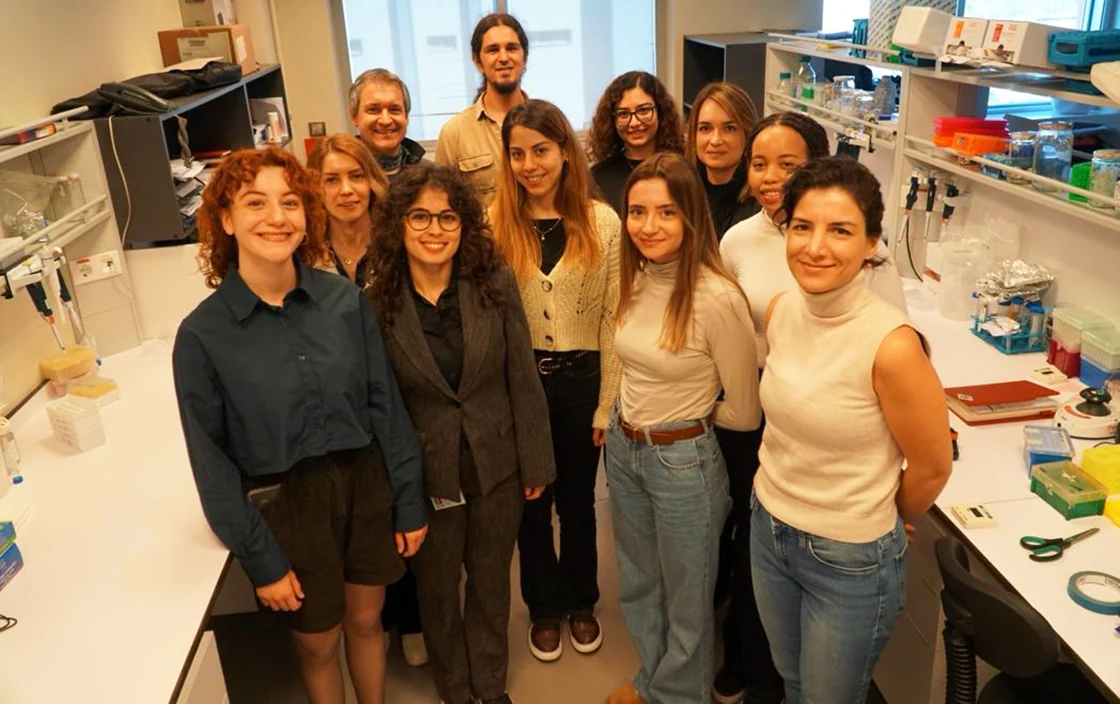
Principal Investigator: Dr. Gerhard WINGENDER
At the mucosal surfaces of the airways, intestine, and urogenital tracts, the barrier between our body and the environment is at times only one cell thick, making it easier for pathogens and toxins to enter. When the balance between the mucosa’s function and its protection against harmful agents is disturbed, disease often follows.
Our laboratory’s work improves the understanding of how the various immune cells in and around the mucosa cooperate to maintain its function and health.
We focus on three innate-like T cells: iNKT cells, MAIT cells, and γδ T cells, which share features with innate NK cells and memory T cells and are important players in the immune system. Using a translational approach, we combine work with clinical samples with advanced in vitro, in vivo (mouse), and in silico methods to develop novel diagnostic tools and therapies.
Research Areas
(1) Asthma and COPD: iNKT cells play a potent, but surprisingly contradictory role in lung inflammation. During infections, their Th1-response is protective, whereas during allergic responses, their Th2-response is deleterious. We previously demonstrated the role of iNKT and MAIT cells in allergic asthma (Chandra et al. 2018, Wingender et al. 2011). We currently investigate how iNKT cells influence eosinophilic vs. neutrophilic forms of asthma and COPD (chronic obstructive pulmonary disease).
(2) Innate-like T cells in cancers: We study the role of iNKT cells, MAIT cells, and γδ T cells in hematopoietic, gastrointestinal, and lung cancers. A particular focus is the impact of the cytotoxic ligand TRAIL on the anti-tumour response (Sag et al. 2019).
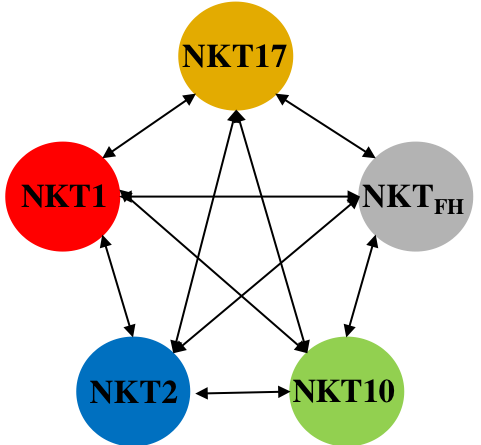
(3) iNKT cell subsets: Similar to conventional CD4+ T cells, iNKT cells can be divided into several functional subsets. We previously discovered a novel subset of iNKT cells with potent regulatory functions, called NKT10 cells (Sag et al. 2014, Wingender et al. 2015a, 2015b). We are investigating the in vivo regulation and therapeutic potential of these NKT10 cells, as well as of two other subsets, NKT2 and NKTFH (follicular-helper iNKT) cells.
Publications
Ayyildiz ZO, Szegezdi E, Wingender G: The expression of TRAIL on human iNKT cells depends on repeated antigenic stimulation and is modulated by type IV ADAM members; revision under review in Frontiers in Immunology.
Eskiocak YC, Ayyildiz ZO, Gunlap S, Korkmaz A, Sag D, Wingender G: The Ca2+ concentration in vitro impacts the cytokine production of mouse and human lymphoid cells and the polarization of human macrophages; 2023; PLOS ONE, 18: e0282037.
Ozkan M, Eskiocak YC, Wingender G: Macrophage and dendritic cell subset composition can distinguish endotypes in adjuvant-induced asthma mouse models; 2021, PLOS ONE, 16: e0250533.
Ozkan M, Eskiocak YC, Wingender G: The IL-10GFP (VeRT-X) mouse strain is not suitable for the detection of IL-10 production by granulocytes during lung inflammation; 2021, PLOS ONE, 16: e0247895.
Wingender G & Kronenberg M: Chapter 7: The role of invariant Natural Killer T cells in autoimmune diseases; In: The Autoimmune Diseases (6th edition), 2020; edited by Noel R. Rose and Ian R. Mackay, 117-153.
Projects
Current funding:
(1) TUBITAK National Leader Researchers Program (#121C257): ‘Targeted induction of NKTFH cells in vivo to improve vaccination protocols’; 1.9.2022 - 1.9.2025.
(2) TUBITAK 1001 (#223S869): ‘Phenotypic, functional, and genetic characterization of human tonsil-derived follicular helper T (NKTFH) cells’; 15.3.2024 - 15.3.2026.
(3) TUBITAK 1001 (#122Z963): ‘Functional evaluation of iNKT and γδ T cells from the omentum of patients with gastrointestinal cancers’; 1.4.2023 - 1.4.2026.
(4) European Commission MSCA-SE (#101130240); ‘CHIRON: The role of the non-canonical death receptor signalling in cancer and immune cells’; 1.10.2023 - 30.9.2027.
Staff
Active Members
Dr. Zeynep Özge Ayyıldız (Post-doctoral fellow, since 09/23);
Dr. Ana Luiza Seidinger (Post-doctoral fellow, since 09/24);
Yonca Ünlüer (Researcher, since 02/22);
Yavuz Mercan (PhD student; since 10/20);
Pumla Bhekiwe Manyatsi (PhD student; since 08/23);
Saliha Kurt (PhD student; since 02/24);
Dora Siğli (PhD student; since 11/24);
Çagil Denizel (MSc student, since 09/24);
Ilgaz Terzi (MSc student, since 09/24);
Ceren Göncü (Executive Assistant, since 02/24).
Former Members
Dr. Jihana Achour (Post-doctoral fellow, 10/22-12/24);
Aylin Yaşar (MSc student, 03/20-09/23);
Zeynep Özge Ayyıldız (PhD student, 09/17-08/23);
Müge Özkan (PhD student, 02/16-01/21);
Cem Eskiocak (Researcher, 04/18-12/20);
Sezgin Bal (MSc student, 09/17-9/20);
Zeynep Tanyolac (MSc student, 08/17-09/20);
Başak Gündüz (MSc student, 05/17-04/20);
Dr. Fatma Zehra Hapil (Post-doctoral fellow, 12/17-02/19)
Contact: gerhard.wingender@ibg.edu.tr